Job-hunting didn't get easier. It got louder.
AI made applying free, so everyone sprays — and the channel drowned. The winners in 2026 aren't applying to more jobs; they use the same AI for the opposite job: to aim — reframe their level, target the few roles where they're scarce, and convert weak ties into conversations before a role is advertised.
There is a coherent 2026 style (§12). And the Articulate opportunity is in §09: the market sells volume; the broken link is positioning and relationships.
The problem, in numbers
Two facts sit on top of each other: AI writing genuinely helps the individual, and AI volume has made the channel worse for everyone. Both are measured.
Underneath the flood, the basics still decide: in the MIT study, applicants with >99% of words spelled correctly were hired nearly 3× more than those under 90%. And the market is noisier than the raw numbers — an estimated 18–22% of postings are "ghost jobs", and most seekers now report hitting one. The gap isn't effort. It's that volume stopped being a signal.
Where the jobs are
The board is no longer one place. Read the leaderboard as shape, not gospel — each source counts different things (postings vs. traffic vs. hires).
| Channel | What it's for | Real position |
|---|---|---|
| Professional / senior roles, recruiter search | The default for white-collar; also where the spray flood lands hardest | |
| Indeed | Volume aggregator, all levels | Largest raw posting volume; weak signal, high noise |
| Glassdoor | Pay & culture intelligence | Used to research, not to apply |
| Welcome to the Jungle (Otta) | Curated tech / startup roles | Higher-signal for skilled candidates |
| Wellfound | Startup roles, direct-to-founder | Niche but warm |
| Bayt · Naukrigulf | The Gulf / MENA market | Where regional senior roles actually post |
| The hidden market | Roles filled before they post | Where weak ties win — see §07. Most senior moves never reach a board |
The most important row is the last one. The more crowded the public boards get, the more the real action moves to referral and conversation — which is exactly the lever AI can't mass-produce.
The AI tool stack
The "job search" is no longer one app — it's a five-layer stack. The tools are commodity now; knowing which to ignore is the skill.
 ChatGPT
 Claude
 Gemini
 Jobscan
 Teal
Teal Resume Worded
 Kickresume
 Enhancv
 Rezi
Rezi LinkedIn AI
 Careerflow
 Jobright
 Final Round AI
 Yoodli
 interviewing.io
 JobCopilot
 LazyApply
 AIHawk
The 2026 shift: away from one-shot CV generators toward agentic assistants that research and shortlist. The good ones (layers ②–⑤) raise your floor. Layer ⑥ — covered next — is where most people go wrong.
The sites that offer help, seen
The dedicated career-help tools, captured at their homepages — resume & ATS optimisation, discovery & matching, interview prep, and the auto-apply agents. Click any to open the live site.
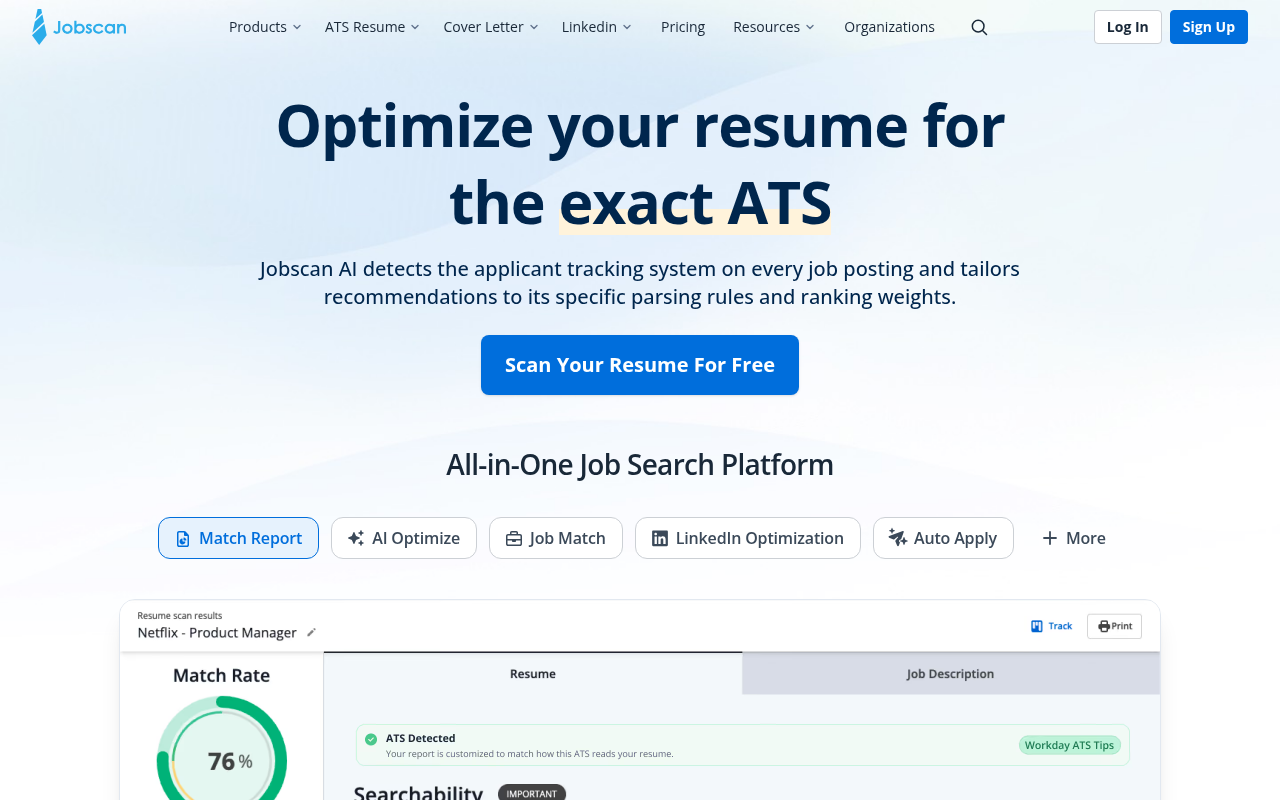 Jobscan — ATS resume checker
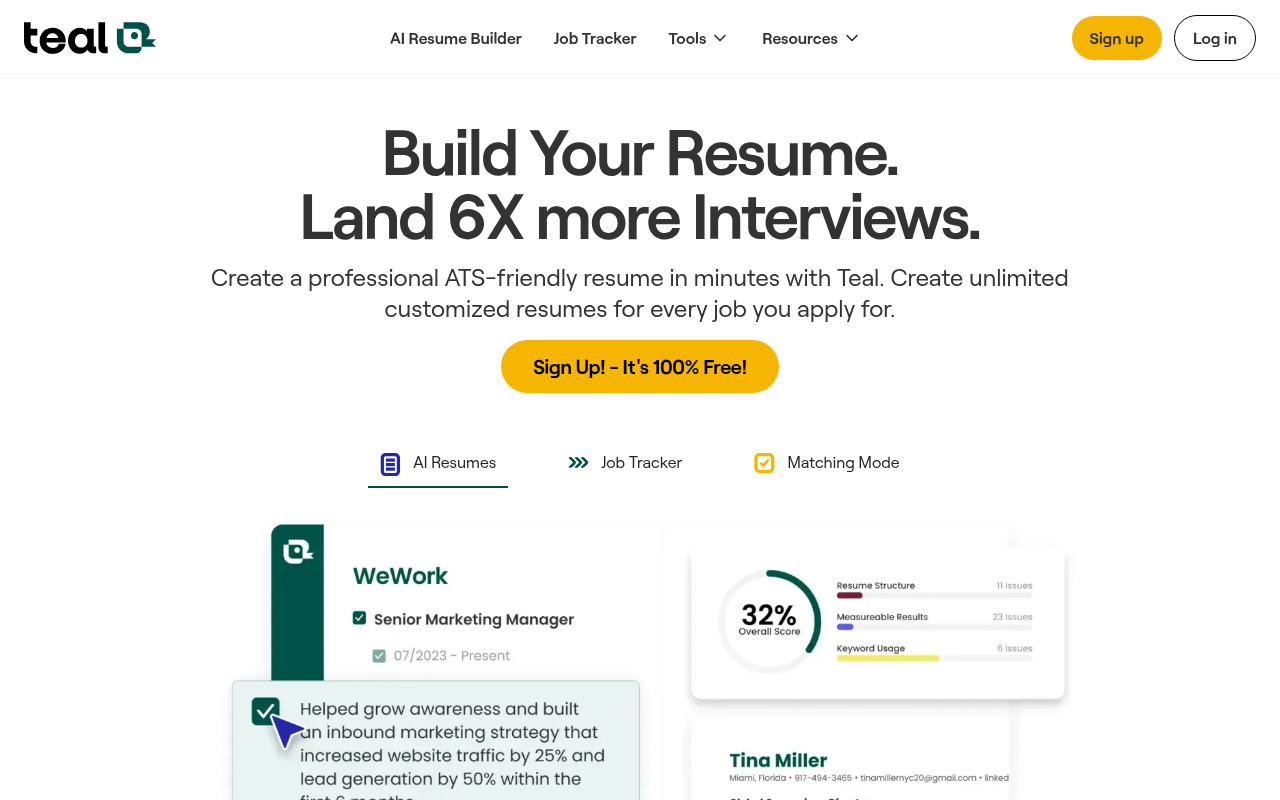 Teal — resume builder & tracker
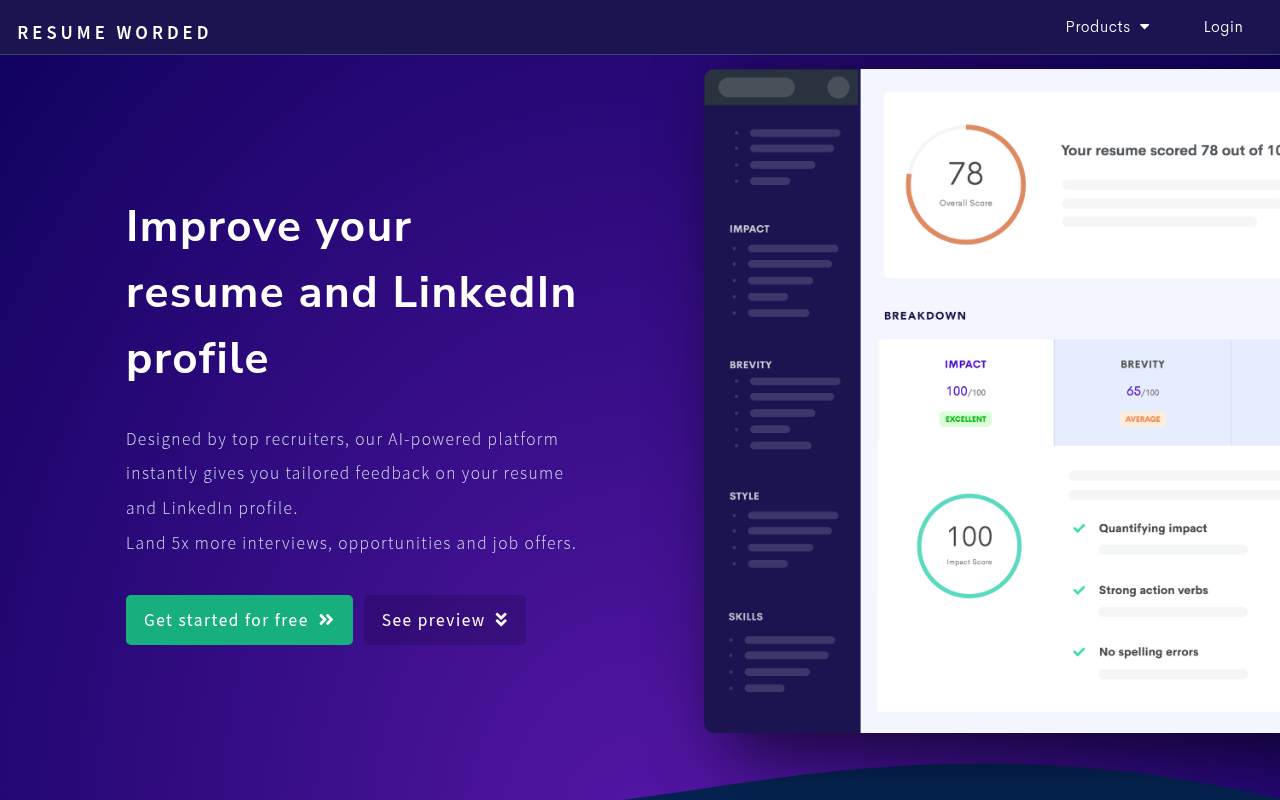 Resume Worded — resume & LinkedIn grader
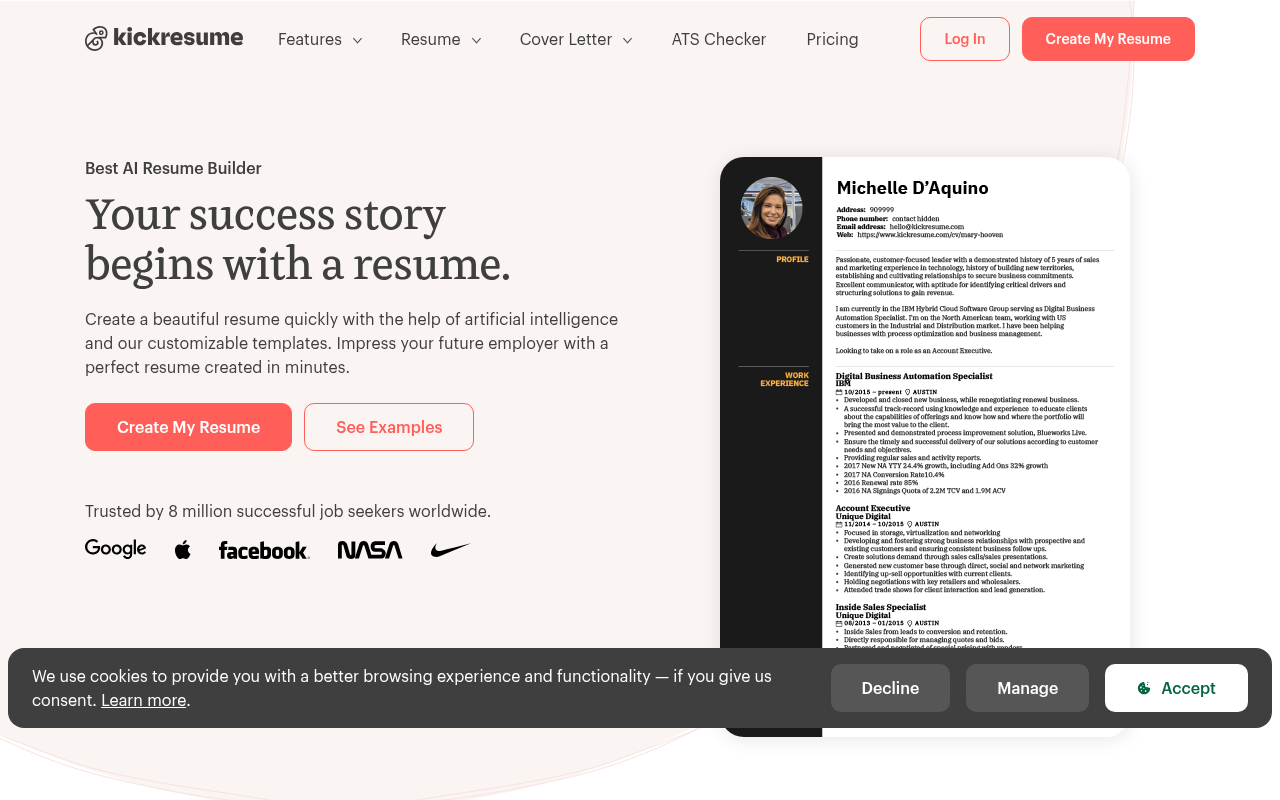 Kickresume — resume & cover-letter builder
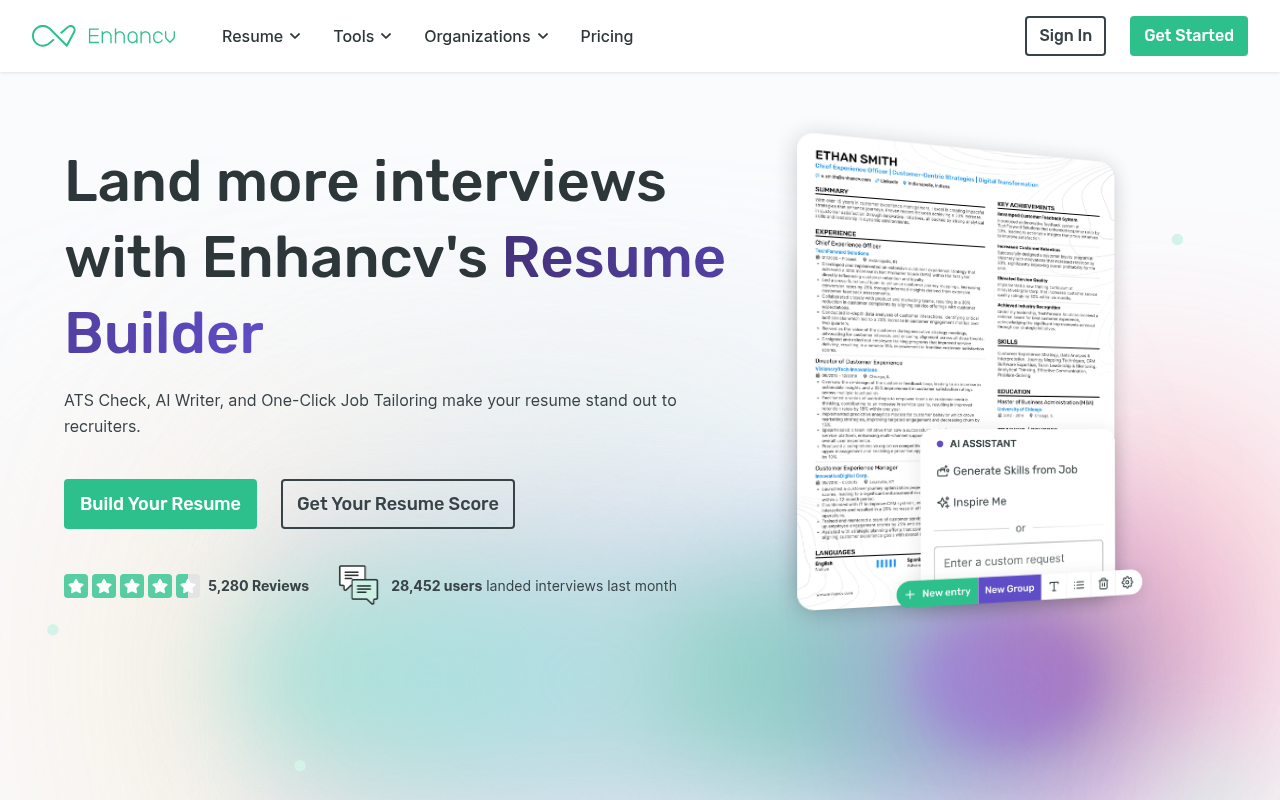 Enhancv — resume builder
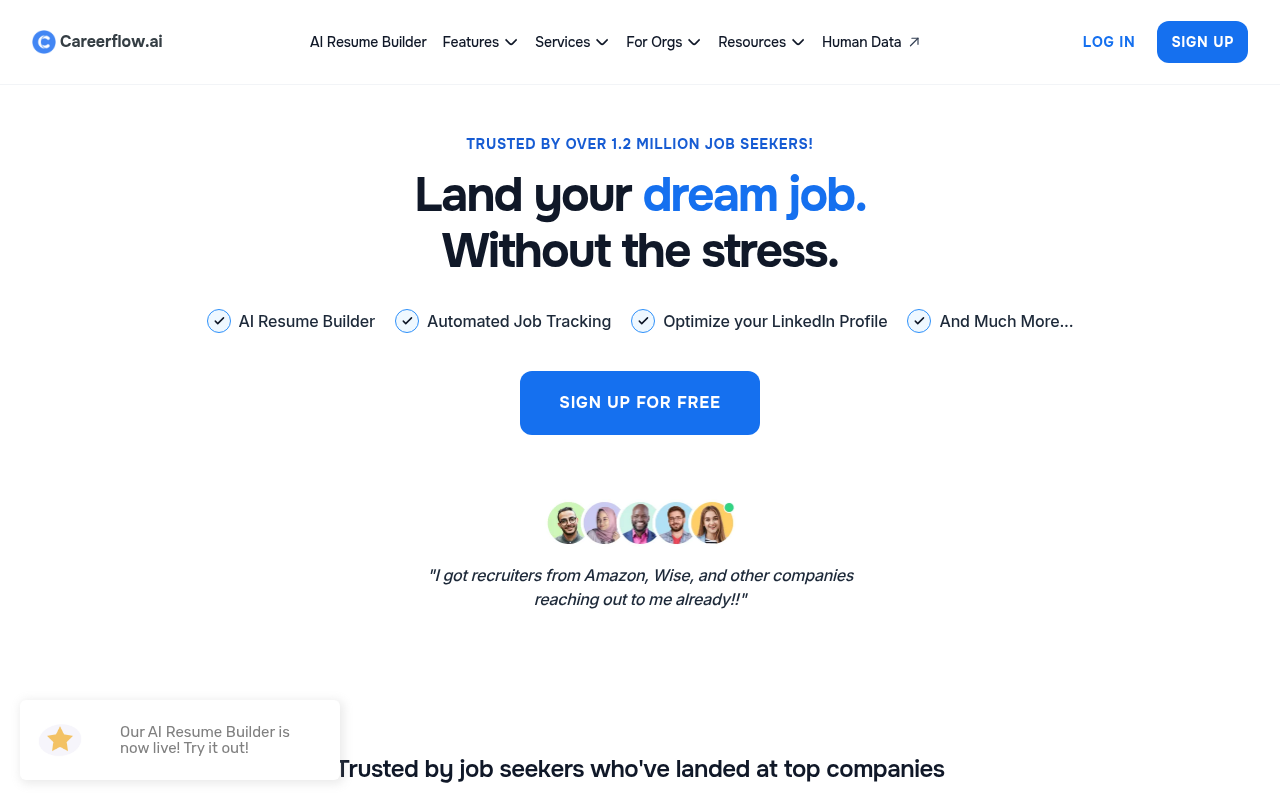 Careerflow — AI job-search copilot
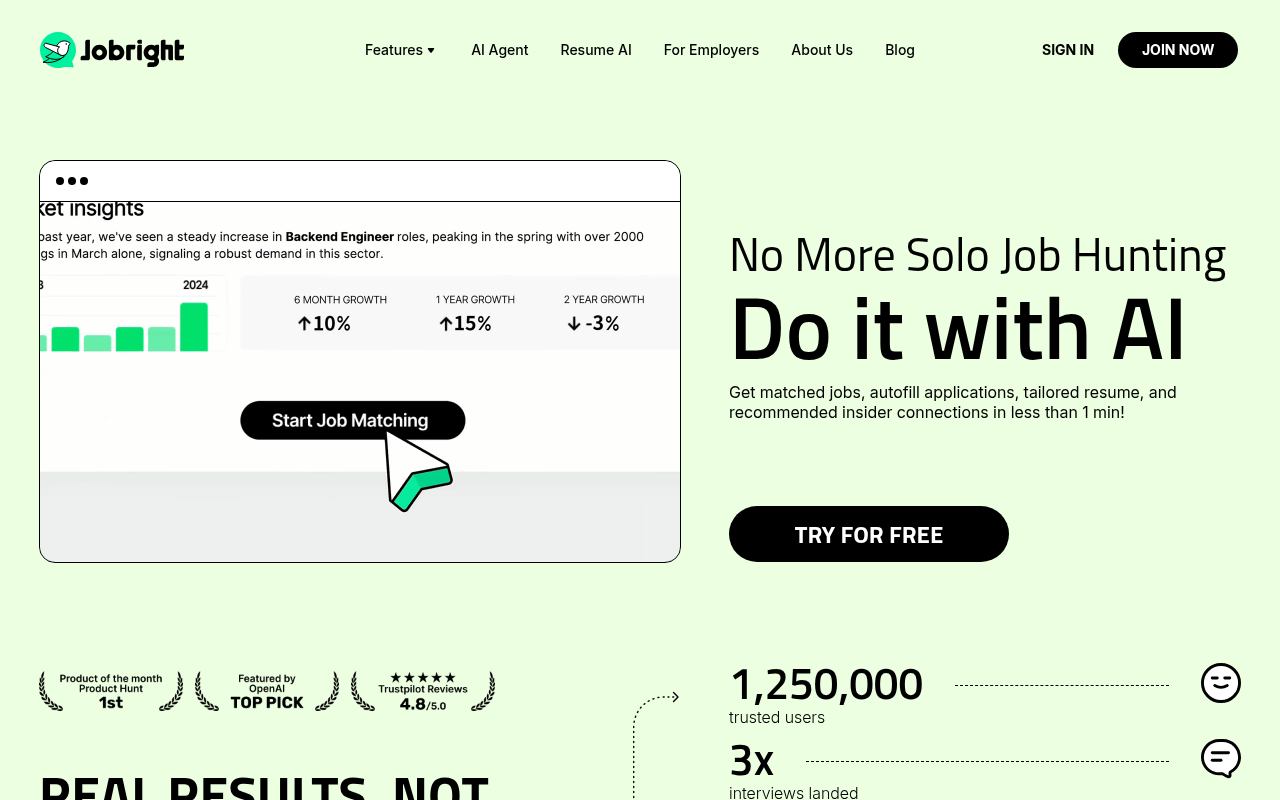 Jobright — AI job-match copilot
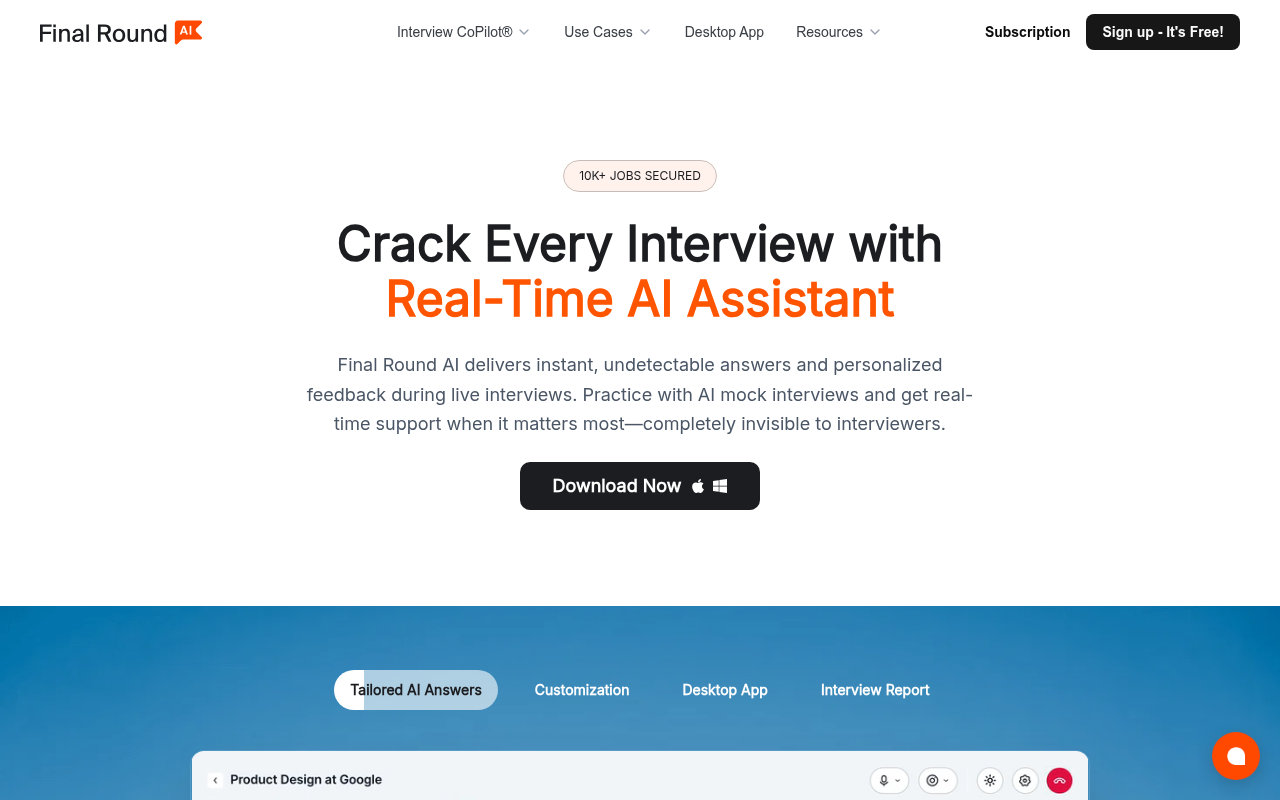 Final Round AI — interview assistant
 Yoodli — AI roleplay & speech coaching
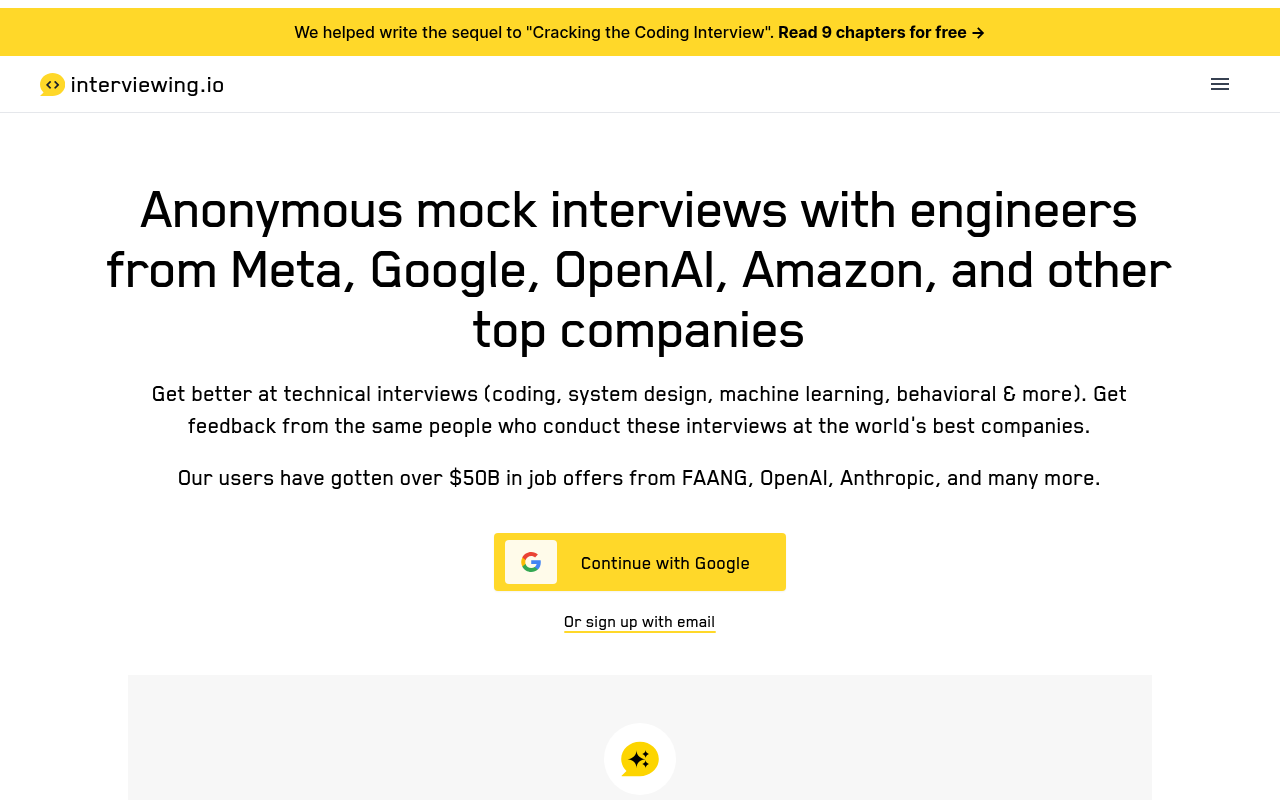 interviewing.io — technical interview prep
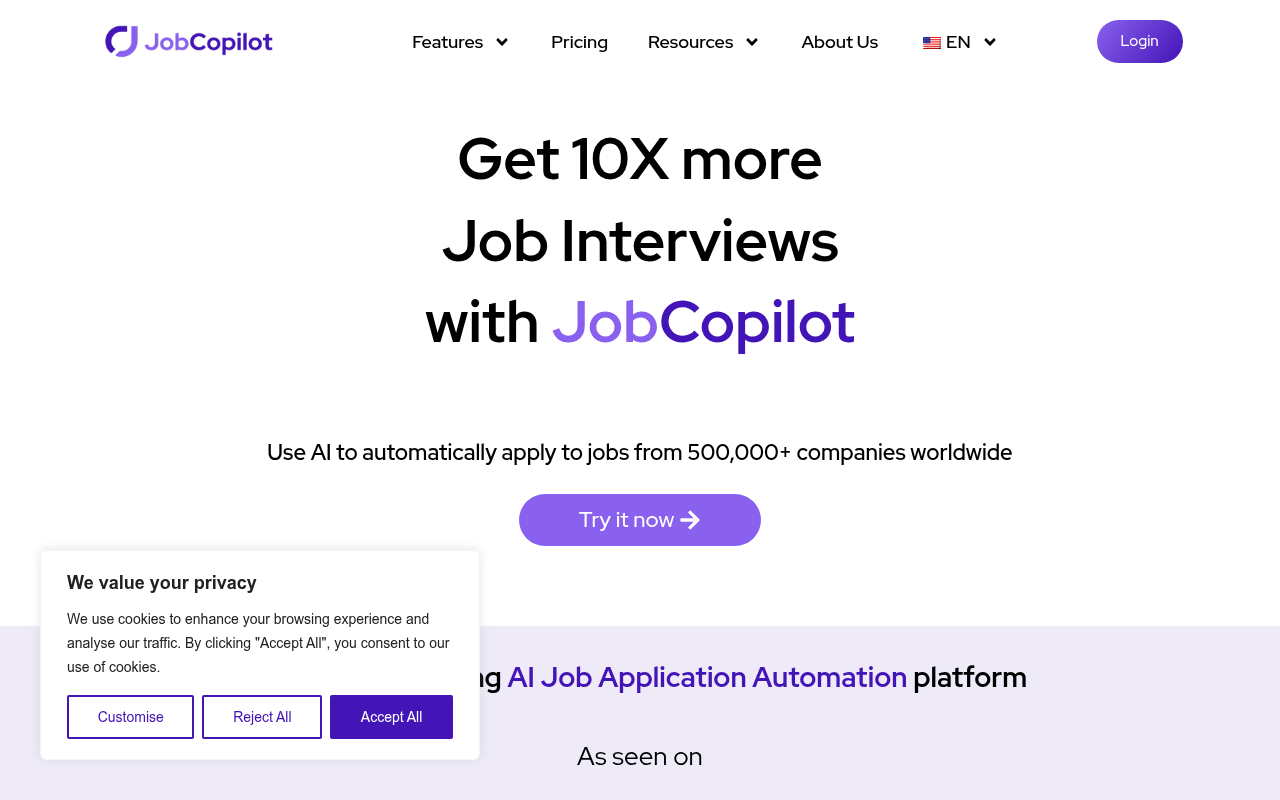 JobCopilot — auto-apply agent
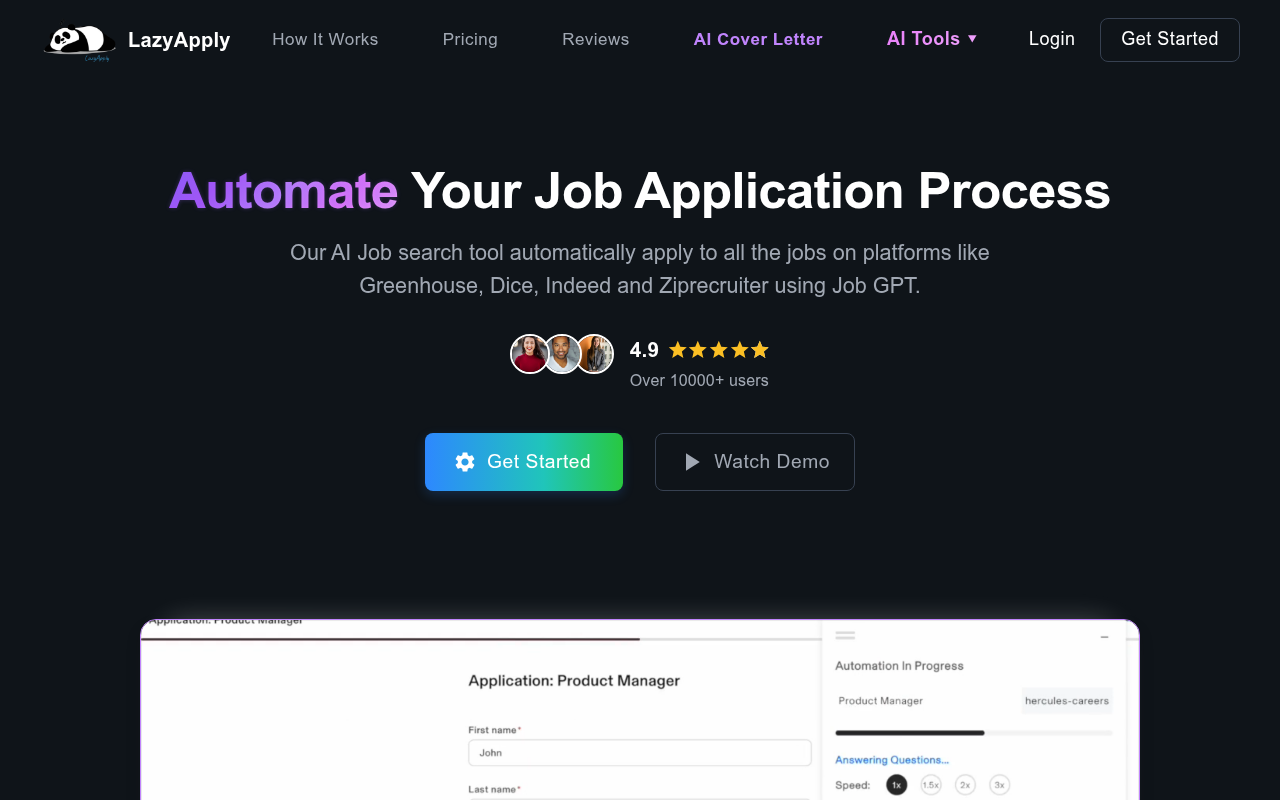 LazyApply — auto-apply agent
Screenshots are homepages captured June 2026 for reference; marks belong to their owners. Inclusion is descriptive, not an endorsement.
The agents
Autonomous agents that find, score and submit applications without you are real, and they work mechanically. They are also the engine of the flood — the reason the channel is drowning.
- Off-the-shelf auto-appliers — JobCopilot, LazyApply, Autojob, the open-source AIHawk — point them at a profile and they apply at scale across LinkedIn, Indeed and company sites.
- Custom agents — people build their own. One developer reported an agent running 24/7 on an M1 Mac that submitted 552 targeted LinkedIn applications in 14 days.
- The two-sided arms race — employers answer the bots with their own AI screening, so AI now talks to AI on both ends. Chicago Booth found AI-run first interviews actually produced 12% more offers and 18% more starters — the screening side is getting good.
The techniques
Most bad searches are bad because they skip the highest-leverage move and over-invest in the lowest. Named and ranked:
| Technique | What it does | Leverage |
|---|---|---|
| The reframe | Re-present the same experience at its true seniority — reset the recruiter's anchor | Highest. The core move |
| ATS keywording | Tailor each CV to the posting's language so it clears the filter | High — table stakes now |
| Profile surfacing | Rewrite the LinkedIn headline + skills around the terms recruiters search | High — one free hour |
| Salary negotiation | AI to research bands, model the counter-party, rehearse the script | Medium-high — and underused |
| Personal-brand prompting | AI as editor and sparring partner for a point of view — never ghostwriter | Compounds slowly |
| Mass auto-apply | Spray a generic CV at volume | Negative once everyone does it |
On negotiation, the evidence is counter-intuitive: MIT research finds a warm, collaborative tone outperforms an aggressive one. And on brand: the operators who win are explicit that AI is the editor, never the author — AI-slop reads as AI-slop, and a senior reader clocks it in a sentence.
Protocols that work
The reframe
Re-present the same evidence at the correct level so title, pay and search-visibility match the real scope. A "manager" doing director work is anchored low by recruiters and hidden from senior searches; a precise reframe resets the anchor. Grounded in Spence's job-market signaling and Tversky–Kahneman anchoring.
Weak ties & the hidden market
Most senior moves come through loose, second-degree contacts, not job boards — Granovetter's "Strength of Weak Ties" (1973). The play: 5–8 real conversations a week with people already doing the role you want, each ending with "who else should I talk to?" — turning 50 names into 150.
Test-and-learn, not introspect-then-leap
Career change works through small experiments and conversations before applications — Herminia Ibarra, Working Identity. You act your way into a new direction; you don't think your way into it.
Common pitfalls
- Spraying — high volume, generic CV, into an 11,000-a-minute flood. Feels productive, buries you with everyone else.
- The under-levelled title — accepting a label one rung below your real scope, anchoring every recruiter low.
- AI-slop voice — autogenerated profiles and posts that a senior reader clocks instantly. Em-dash spray, triple-parallels, aphoristic closers.
- Applying instead of networking — working the public board while the senior roles fill through referral.
- Losing on fundamentals — spelling and clarity still gate you (3× hire difference); AI's first job is to stop you tripping here.
- Over-reach — jumping to "VP" reads as a stretch; "Head of / Director" is the credible next rung.
- No measurement — no baseline, so no idea whether anything is working.
How high-performers do it
Across the career-science literature — Ibarra, Granovetter, Belcak, Dalton — the moves are strikingly consistent:
- Aim, don't spray. A short list of right-fit roles beats a long list of any-fit ones.
- Reframe to the real level. Position the evidence at its true seniority before applying.
- Lead with outcomes. Numbers first, built for the seconds-long recruiter scan.
- Work the weak ties. Conversations before applications; the role finds you before it posts.
- Use AI as leverage, not author. Research, draft, rehearse — then make it human.
- Measure the baseline. Capture profile views, conversations, interviews — and move them.
The Career-Search Maturity Model
Synthesised from the frameworks above. Be honest about your median week, not your best one.
Spraying
"I've applied to 200 jobs and heard nothing."
Generic CV, mass applications, no targeting. Title accepted as given. Zero conversations. No idea what's working.
Tidying
"My CV looks much better now."
CV and LinkedIn cleaned up, maybe AI-assisted. Still applying through the front door, still at the given title, still few conversations.
Positioning
"I know what level I'm really at, and I aim."
Reframed to true seniority. CV leads with outcomes and clears ATS. Applies only to right-fit roles. Starts having target-role conversations.
Networking-first
"Most of my pipeline comes from conversations."
A running list of target people; 5–8 real conversations a week; weak ties worked deliberately. AI does the research; the person does the relationship. Baseline measured and moving.
Compounding
"Roles find me before they're advertised."
A visible point of view and a warm network mean opportunities arrive inbound. Each move resets the level and the pay. The search is rarely "on" because the pipeline never turns off.
Voices to follow
| Voice | Why | The artefact |
|---|---|---|
| Herminia Ibarra | The science of career transition — act, don't introspect | Working Identity |
| Mark Granovetter | The foundational finding: weak ties drive job moves | "The Strength of Weak Ties" (1973) |
| Reid Hoffman | Career as a permanent-beta startup; network as asset | The Start-up of You |
| Steve Dalton | A systematic, networking-first search method | The 2-Hour Job Search |
| Austin Belcak | The modern "hidden market" reverse-recruiting playbook | Cultivated Culture |
| Andrew LaCivita | Practical interview and positioning coaching | milewalk (YouTube) |
| Liz Ryan | Human-voice cover letters and anti-corporate job-search | Human Workplace |
| van Inwegen / Horton (MIT) | The hard evidence that AI writing help raises hires and wages | NBER w30886 |
The 2026 style
It has cohered enough to name: aim, reframe, converse. Its tenets:
- Targeting is the default; mass-applying is the exception you justify.
- Position at your true level before you apply — reframe, don't inflate.
- The CV leads with outcomes and numbers, built for a seconds-long scan.
- The pipeline runs on conversations and weak ties, not the apply button.
- AI is leverage — research, draft, rehearse — never the author. No slop.
- The profile is written around the terms recruiters actually search.
- A baseline is captured and moved — profile views, conversations, interviews.
- A point of view, posted lightly and consistently, pulls opportunities inbound.
Definitions
- Spray
- Firing a high volume of generic applications, usually via auto-apply tools. Cheap, viral, and increasingly self-defeating.
- Signal
- Using AI to aim — reframe, target, and approach a small number of right roles and people as an obvious, warm candidate.
- The reframe
- Re-presenting the same evidence at the correct seniority so title, pay and search-visibility match the real scope.
- ATS
- Applicant Tracking System — software that filters CVs by keyword before a human sees them.
- Auto-apply agent
- An autonomous tool that finds and submits job applications without the person's involvement.
- Weak ties
- Loose, second-degree contacts — statistically the source of most senior moves (Granovetter).
- Ghost job
- A posting with no real intent to hire; an estimated 18–22% of listings.
Sources are linked inline throughout. Key primary sources: MIT/NBER w30886, NYT (2025), Chicago Booth. Vendor and aggregator figures (HeroHunt, impact studies) are labelled — verify before client-facing use. Pay and ratio figures are indicative ranges, not guarantees.